Family Pontoon Rental Planning: Capacity, Safety Gear, Shade, and Dock Access
A family can arrive at the dock with a legal passenger count and still discover that the assigned pontoon has no secure place for the stroller, too little shade for a child, or a boarding gap an older relative cannot cross. Avoiding that costly mismatch requires checking the specific boat, dock, equipment, route, and rental agreement before paying.
How many family members can a pontoon boat rental comfortably carry?
A family should choose a pontoon boat rental by the specific boat’s passenger and weight limits, then reduce the practical group size when coolers, strollers, mobility equipment, or swimming gear consume seating, storage, or walkway space.
Posted capacity is not the same as comfortable family capacity
A permitted load can still create a poor family fit. Every passenger needs suitable seating, while adults must retain enough room to supervise children and move between the gates, helm, and boarding area.
- Confirm both the passenger count and total load limit for the assigned model.
- Ask how the operator counts infants, children, batteries, and mobility devices.
- Map each cooler, stroller, bag, and swim item to secure storage.
- Leave gates, walkways, safety equipment, and boarding points unobstructed.
How should families compare 10-person and 12-person pontoons?
| Fit check | 10-person listing | 12-person listing |
|---|---|---|
| Usable seating | Verify seats after gear is loaded | Check whether extra capacity adds real seating |
| Trip fit | May suit a smaller, lightly packed group | May provide more supervision or storage room |
| Decision | Compare layout and limits | Do not assume the larger number means more comfort |
Request model-specific deck plans, photographs, rates, shade coverage, and fuel terms for the same date. Once the layout fits, confirm which safety gear and operator requirements govern the rental.
Which safety gear and operator requirements apply to a family pontoon rental?
A family pontoon rental must carry the safety equipment required for its jurisdiction, boat size, and operating waters, with a correctly sized wearable personal flotation device for every passenger. Families must also check local child-wear rules, operator qualifications, towing restrictions, and any stricter rental-company conditions.
| Requirement source | What it may control | What to verify |
|---|---|---|
| Government boating authority | Operator age, boater education, flotation devices, onboard equipment, towing, navigation hours, and restricted waters | Rules currently in force for the state, province, territory, or country where the boat operates |
| Rental company | Minimum renter age, identification, payment card, experience, safety briefing, and authorized operators | Written terms, not assumptions based on local law |
| Marina handover staff | Equipment locations, operating-area map, emergency contact, and incident reporting | The assigned pontoon’s actual inventory and condition before departure |
Child life jackets must match the child’s size and local rules
Parents should give the operator each child’s weight or labeled life-jacket size before arrival and ask whether infant, child, and youth sizes are in stock. Confirm the applicable approval label, required wear period, and whether the company allows a family to bring an approved personal device.
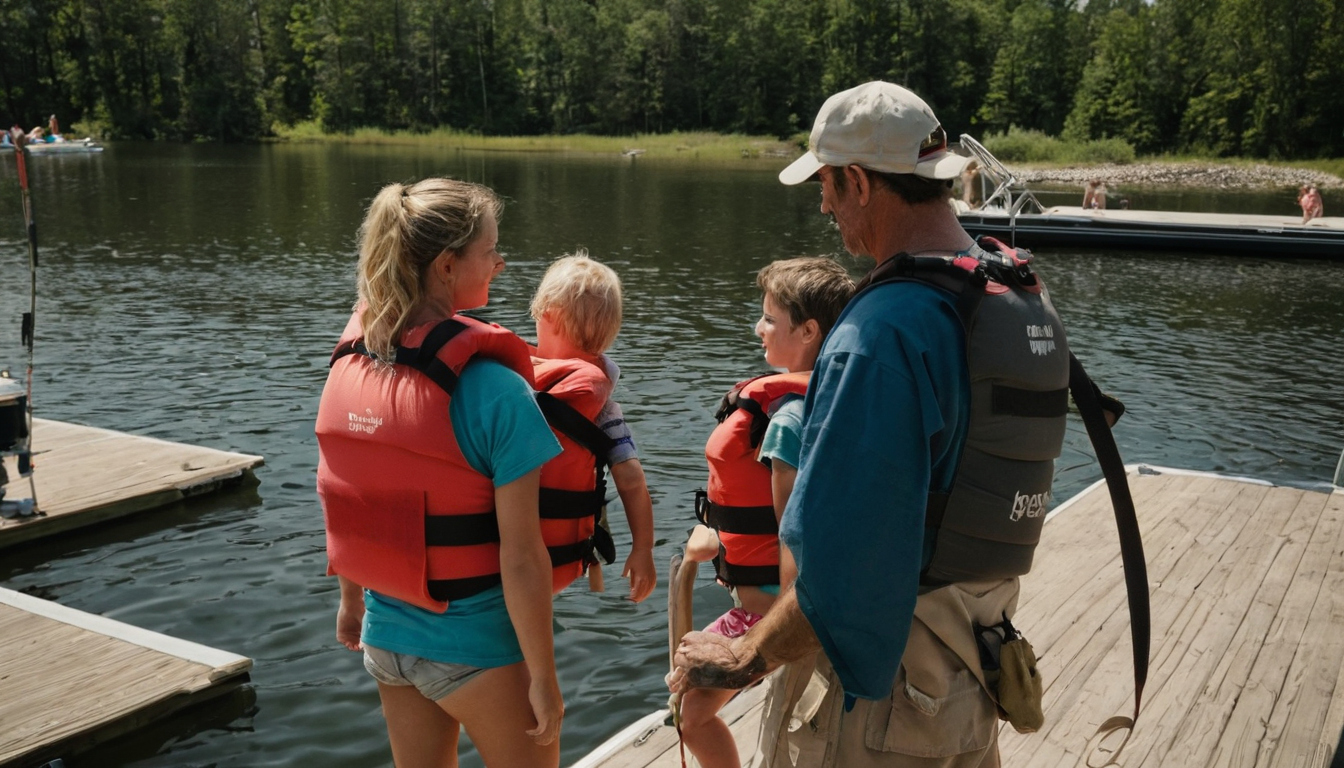
Which safety gear and operator requirements apply to a family pontoon rental shown with practical context cues.
In the United States, where an applicable state has not established its own child-wear requirement, the federal child PFD rule requires a child under 13 to wear an appropriate approved PFD while a recreational vessel is underway, unless the child is below deck or in an enclosed cabin. State rules may set different conditions, so check the governing boating authority.
Who is legally permitted to operate the rented pontoon?
Government permission and company permission are separate tests. A visitor may need boater education, a temporary certificate, identification, or proof accepted from another jurisdiction. The rental agreement may impose a higher minimum age, require prior handling experience, limit operation to named drivers, or refuse release after an unsatisfactory briefing.
Families uncertain about licensing, workload, or maneuvering experience should compare a bareboat rental with a captained charter before paying a nonrefundable deposit.
Families should inspect emergency equipment before leaving the dock
The handover should identify every wearable flotation device, throwable device if required, fire extinguisher, anchor, first-aid kit, navigation light, emergency cutoff equipment, communication method, and sound-producing device. Under the U.S. Inland Navigation Rules, a vessel less than 12 meters need not carry the larger prescribed whistle-and-bell equipment, but it must have another way to make an efficient sound signal under 33 CFR § 83.33.
Photograph missing, damaged, or inaccessible equipment and have staff record the issue before signing the departure form. Once safety equipment checks out, the next fit test is whether the canopy, weather plan, and storage can support the family for the full outing.
How much shade, weather protection, and storage does a family pontoon need?
A family pontoon needs deployed shade for passengers most vulnerable to heat and sun, but a bimini top seldom covers every seat throughout the day. Suitability depends on the canopy footprint, changing sun angle, trip timing, weather, storage space, and any operator restriction on leaving the top open while underway.
What is the canopy on a pontoon called, and what does it cover?
The folding fabric canopy commonly listed with a pontoon boat rental is called a bimini top. A listing that says “bimini included” does not confirm which seats receive shade. Ask for the assigned boat’s model, canopy dimensions, deployed photographs, and a deck plan showing the shaded footprint.
Canopy coverage changes as the boat turns and the sun moves. Confirm whether the helm, rear lounge, or forward seats remain exposed, then reserve the shaded positions for infants, older passengers, and anyone sensitive to heat. Also ask whether extension panels or weather enclosures are included rather than optional.
- Can the bimini remain deployed at the operator’s permitted cruising speed?
- Must renters lower it during strong wind or before passing under bridges?
- Does the canopy interfere with boarding, fishing, or access to stored gear?
A bimini provides shade, not full storm protection. Families should review the destination forecast and the rental company’s rules for delays, credits, early returns, and weather cancellations. For covered U.S. waters, the National Weather Service marine portal links to coastal, offshore, Great Lakes, and high-seas forecasts and marine warnings.
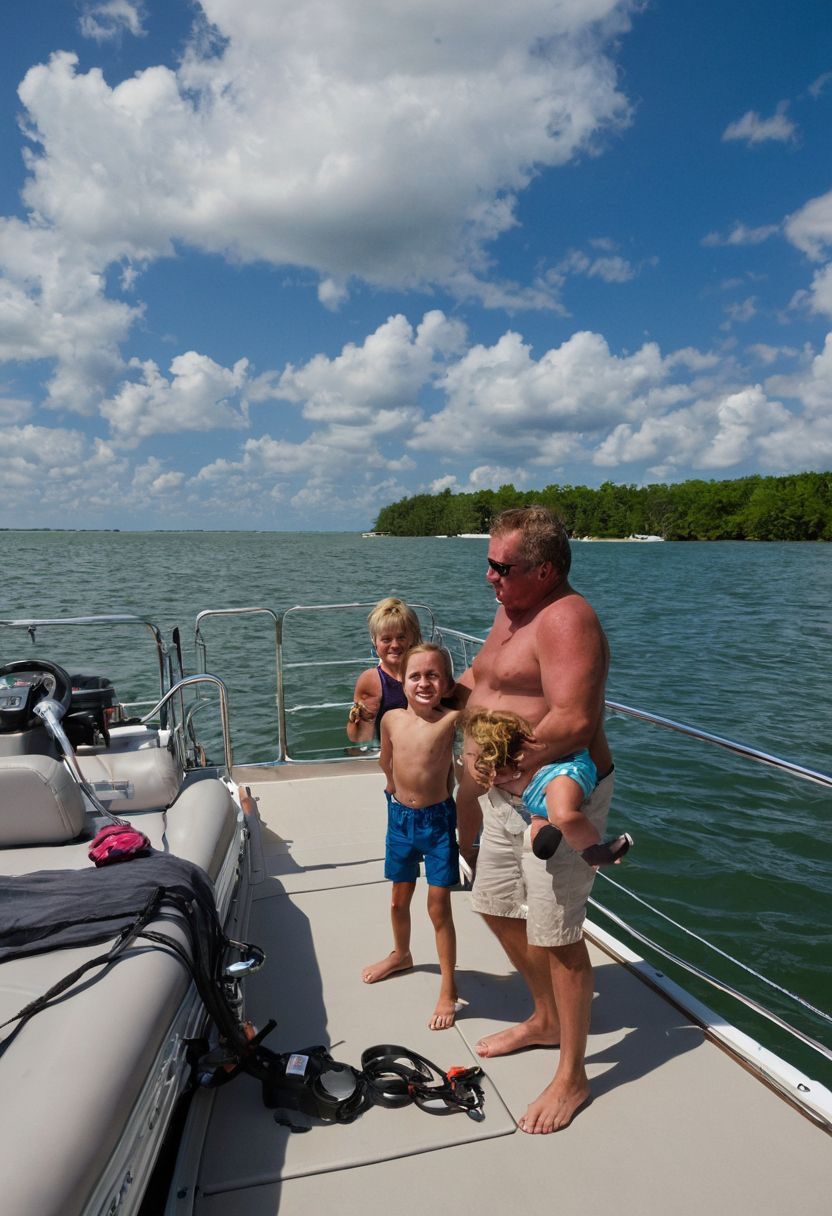
How much shade, weather protection, and storage does a family pontoon need shown with practical context cues.
Where can a family secure coolers, bags, and strollers?
Family gear must fit in designated compartments or secure deck locations without narrowing walkways, blocking gates, covering emergency equipment, or interfering with the helm. Request under-seat and dry-storage descriptions, approved cooler dimensions, and confirmation that a folded stroller or mobility aid can be restrained safely.
- Check restrictions on glass, grills, oversized coolers, and loose equipment.
- Assign one accessible location for medicines, dry clothing, and children’s supplies.
- Count bulky gear when comparing usable space, even if it does not affect passenger count.
Once shade and storage pass the fit test, inspect the physical route onto the boat because dock height, boarding gaps, gates, and handholds may still determine whether the rental works.
Dock access can determine whether a pontoon rental works for children and passengers with limited mobility
Dock access may matter more than seating capacity when a family includes toddlers, older adults, or passengers with limited mobility. Before booking, examine the distance from accessible parking, dock stability, boarding height, gate width, handholds, staff assistance, restroom access, and the marina’s method for handling wheelchairs, walkers, and strollers.
Which dock and pontoon measurements should families request?
Listing photographs rarely show the boarding gap or raised threshold clearly. Ask the operator to confirm measurements for the assigned pontoon and boarding location, not merely for another boat in the rental fleet.
- Gate clear width: Compare the narrowest opening with the mobility device or folded stroller.
- Threshold height: Identify any raised lip between the dock, gate, and deck.
- Dock-to-deck height and gap: Request the expected relationship under normal loading and water conditions.
- Dock width and turning space: Confirm enough room to position a wheelchair, walker, or stroller without blocking other users.
- Gangway arrangement: Ask how slope and handrail placement change with tides, reservoir levels, or seasonal water levels.
- Boarding aids: Verify the dimensions and weight limits of any ramp, transfer device, or marina-supplied aid.
A marina map should also show accessible parking, check-in, restrooms, the route to the dock, and the exact boarding point. Families should ask about uneven surfaces, stairs, long ramps, unsecured transitions, and the distance passengers must walk.
Staff assistance does not automatically make a pontoon accessible
Informal offers to “help lift” a passenger or mobility device do not replace a stable boarding method. Ask for the marina’s written assistance policy, whether staff perform manual lifting, and what procedure applies if the planned transfer cannot be completed safely.
Mobility devices create a second fit question after boarding. Confirm whether a wheelchair or walker may remain onboard, where staff expect it to be secured, and whether it blocks gates, aisles, controls, or emergency movement. Check accessible-restroom location and operating hours as well.
Before paying, obtain an alternative boarding plan or refund terms for access that proves unsuitable on arrival. Once boarding works, the next test is whether swimming, towing, and the proposed route fit the pontoon rental’s operating limits.
Swimming, towing, and route plans must fit the pontoon rental's operating limits
A family should book a pontoon only after confirming that every planned swimming stop, route, and activity is permitted. Rental operators and local authorities may restrict anchoring, beaching, towing, locks, shallow water, open-water travel, or nighttime operation. Wind, current, water depth, traffic, and reboarding equipment also determine whether a plan is practical.
Request the rental operator’s current operating-area map and mark the intended route before paying. Compare that map with local charts, hazard notices, navigation hours, no-wake zones, and the forecast for the waterway. Ask whether low water, construction, locks, tides, or changing weather could block the route or require an earlier return.
A safe family swimming stop requires more than a boarding ladder
A workable swimming stop needs legal anchoring or an authorized swimming area, adequate depth, manageable current, low vessel traffic, and a reliable way for every swimmer to climb aboard. Confirm the ladder type, handhold position, platform layout, and deployment instructions for the assigned pontoon. A narrow ladder that works for an athletic adult may not suit a child or passenger with limited strength.
Ask the operator to demonstrate the required engine-off and key-control procedure. Before anyone enters the water, assign an adult to watch swimmers, account for every passenger, secure loose gear, and identify underwater hazards. Keep swimmers away from the propeller and traffic side of the boat. If a passenger cannot use the ladder during the dock inspection, choose another pontoon or remove swimming from the plan.
Towing activities require separate permission, equipment, and legal checks
A tow bar or powerful engine does not mean tubing or water skiing is authorized. The rental agreement must permit the specific activity, and the boat’s tow point, engine configuration, and passenger load must support it.
Verify local requirements for operator and observer ages, life jackets, skier-down flags, mirrors, towing areas, and operating hours. Confirm who supplies the rope, towable, flag, mirror, and activity-specific safety gear. Fishing, pets, and onboard alcohol may also carry separate operator restrictions.
Once the route and activities pass these checks, compare the fees, deposits, fuel terms, and weather risks that determine the pontoon rental’s actual cost.
What does a family pontoon boat rental actually cost?
The usable price of a family pontoon boat rental includes the advertised rate plus fuel, taxes, marina or booking fees, deposits, damage protection, cleaning, equipment, late-return charges, and the financial risk created by cancellation and weather terms.
A comparable pontoon quote should use one all-in cost table
Request itemized quotes for the same date, rental duration, pontoon model, route, equipment package, and cancellation window. A vague estimate can make the lowest base rate the most expensive option after check-in charges and return adjustments.
| Cost item | What to record |
|---|---|
| Rental period | Start and return times, base rate, grace period, and overtime increment |
| Mandatory charges | Taxes, booking or marina fees, required cleaning, and required protection products |
| Fuel | Starting level, refill method, fuel price basis, service charge, and how usage is measured |
| Damage exposure | Refundable deposit, card authorization, deductible, exclusions, and damage-waiver terms |
| Optional costs | Coolers, tow equipment, upgraded life jackets, pet fees, or other add-ons |
| Payment timing | Total due at booking, check-in, and after return |
Estimate fuel by asking the operator how the planned route and expected operating style affect the charge. Do not compare quotes using an assumed universal consumption rate.
Weather terms determine who bears the risk of a canceled family outing
A weather policy should explain more than what happens during rain. Before paying, check:
- who decides that wind, storms, visibility, or water conditions make operation unsafe;
- whether customer cancellation receives a refund, credit, rescheduled date, or no remedy;
- whether operator cancellation receives different treatment;
- how named storms, forecast warnings, and shortened rentals are handled; and
- whether a no-show or late return triggers additional charges despite changing conditions.
Save the written policy and itemized quote rather than relying on a phone summary. Once the costs and cancellation risks align, a final pre-booking family fit check can confirm that the assigned pontoon matches the promised capacity, access, gear, and operating terms.
A pre-booking family fit check is the fastest way to compare pontoon rentals near you
Families comparing pontoon rentals near them should use one written checklist and require model-specific answers before paying. The best pontoon boat rental is not necessarily the largest or cheapest option. It must fit the passengers, gear, boarding needs, activities, route, forecast, local rules, and total budget.
Capacity deserves model-specific confirmation. 33 CFR § 183.21 applies its federal capacity-information requirements to specified monohull boats under 20 feet, with listed exceptions. It is not a general federal capacity-plate mandate for pontoons, so request the assigned pontoon’s manufacturer capacity information and rental limits.
Ask these questions before reserving a pontoon boat rental
Send one email or use this list during the booking call:
- Which exact model will we receive, what capacity information applies, and what happens if the operator substitutes another boat?
- Which child life-jacket sizes are available, how many seats the bimini shades, and where will our cooler, stroller, and bags fit?
- What are the gate, boarding gap, ladder, and dock conditions, and whom should we contact about accessibility or boarding assistance?
- What is the written all-in price, including fuel terms, and can we receive the operating-area map, prohibited-activity list, weather policy, and cancellation terms?
Inspect the assigned pontoon before signing the departure form
- Match the model, layout, capacity information, shade, storage, ladder, and agreed equipment to the booking confirmation.
- Photograph existing damage and the displayed fuel level, then ensure staff record both on the condition report.
- Locate every life jacket, emergency signaling device, anchor, controls, boarding ladder, and emergency contact number.
- Report any defect, substitution, missing equipment, or accessibility problem before departure. Do not sign until the operator resolves the mismatch or documents an acceptable alternative.
Retain the agreement, receipt, condition photographs, route restrictions, and emergency number. Confirm the operator’s check-in deadline and ask when to make the final forecast call. This disciplined fit check turns a search for “pontoon rentals near me” into a booking decision based on the boat your family will actually use.
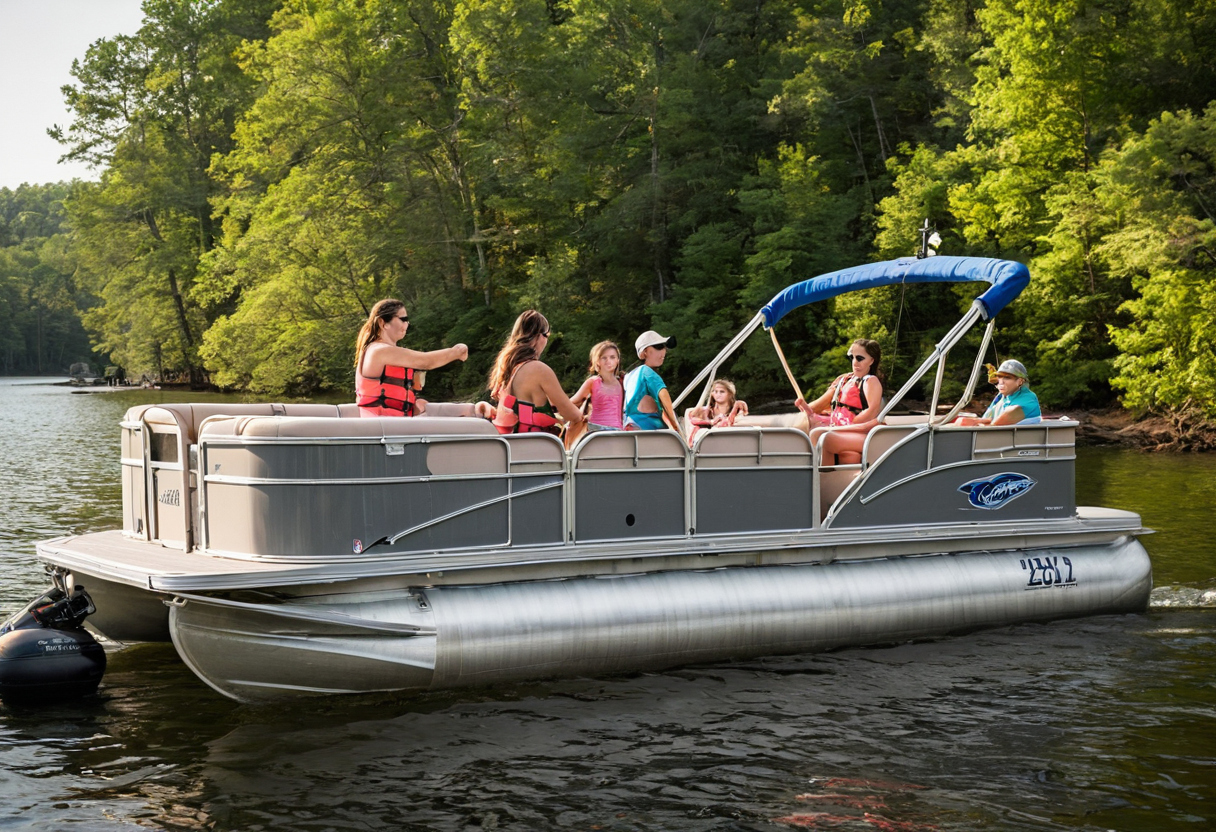
A pre-booking family fit check is the fastest way to compare pontoon rentals near you shown as an editorial planning reference.
Frequently asked questions about family pontoon rentals
These edge cases still require answers tied to the assigned boat, local rules, and written rental agreement.
How many people can fit on a 30-foot pontoon when passenger weight, seating, and family gear are considered?
Length alone does not establish capacity. Check the manufacturer information and operator limit for the specific 30-foot pontoon, including both passenger count and total permitted load. Then confirm that every person has suitable seating and that coolers, strollers, mobility devices, and swimming gear can be secured without blocking gates or walkways.
What identification, age, and boater-education requirements apply when renting a pontoon boat locally?
The answer depends on the operating jurisdiction and rental company. Ask which government-issued identification, boater-education proof, temporary certificate, minimum age, and payment card the renter and every authorized operator must present. Obtain the requirements in writing before booking.
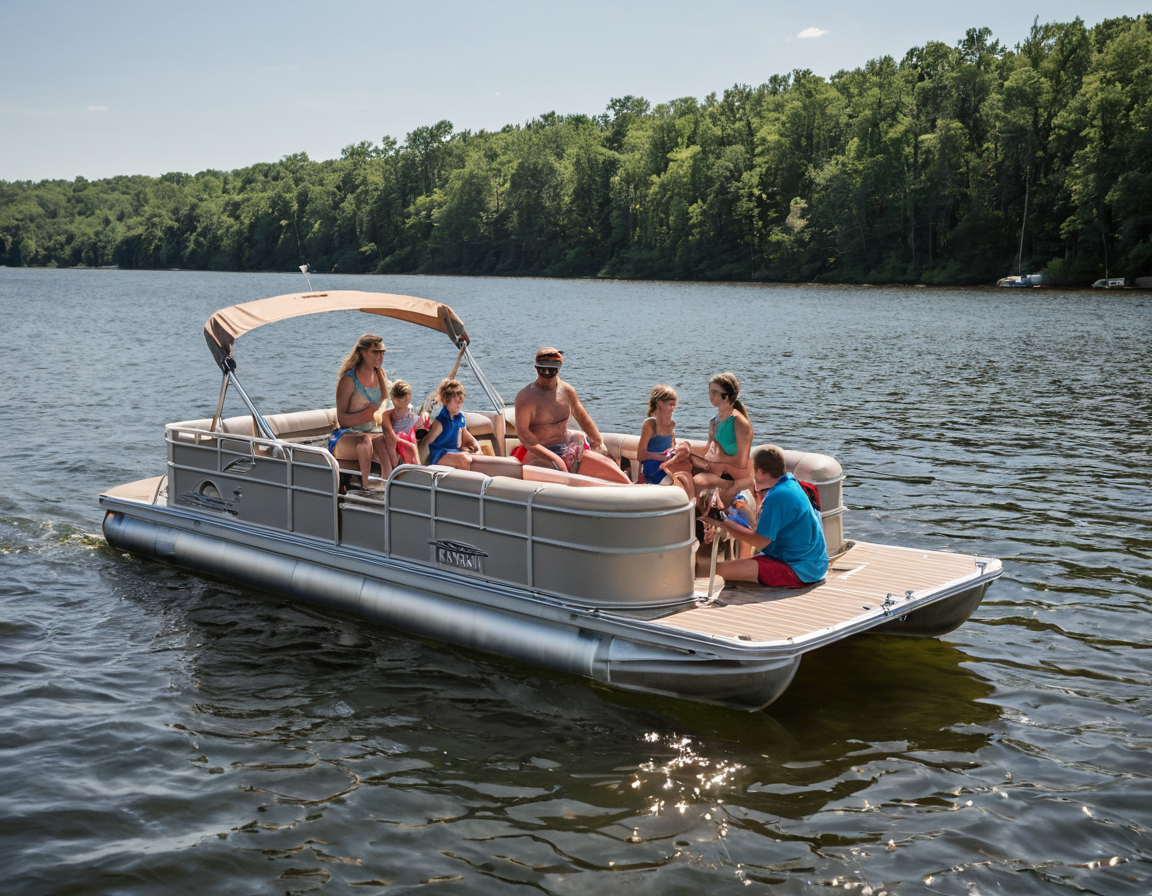
Frequently asked questions about family pontoon rentals shown as an editorial planning reference.
What is the canopy on a pontoon called, and how much seating does it actually shade?
The folding fabric canopy is commonly called a bimini top. Coverage varies by boat and sun angle, so request deployed photographs or a deck plan for the assigned model. Confirm which seats remain shaded while the pontoon is stationary and underway.
Can a family sleep overnight on a rented pontoon?
Do not assume an extended rental permits overnight occupancy. The company may limit rental hours or prohibit overnight use, while local rules may restrict anchoring, mooring, navigation, or sleeping aboard. Confirm permission, sanitation arrangements, lighting requirements, operating boundaries, and return times in writing.
Do infants and children count toward a pontoon’s passenger capacity, and who provides their life jackets?
Families should treat every infant and child as a passenger when planning the load, then confirm how the manufacturer information and rental operator apply capacity limits. Ask whether the operator provides an approved life jacket in each child’s required size or permits the family to bring one. Verify fit and condition before leaving the dock.