The New Buyers of Milan: Why Singapore and Vietnam Are Rewriting Italian Furniture
The New Buyers of Milan: Why Singapore and Vietnam Are Rewriting Italian Furniture
For readers assessing Italian furniture, the practical question is how the idea performs in a real room, not only how it photographs. The 64th Salone del Mobile.Milano ran at Rho Fiera from 21 to 26 April 2026 and closed with 316,342 visitors from 167 countries, 68% of them international trade. A workshop reads that number differently from a journalist: two in three people writing orders in Milan will take the furniture somewhere the wood has never been. More of those somewheres are hot, wet and forty floors up, and the piece has to survive the address, not the showroom.
What the fair’s own ranking actually says
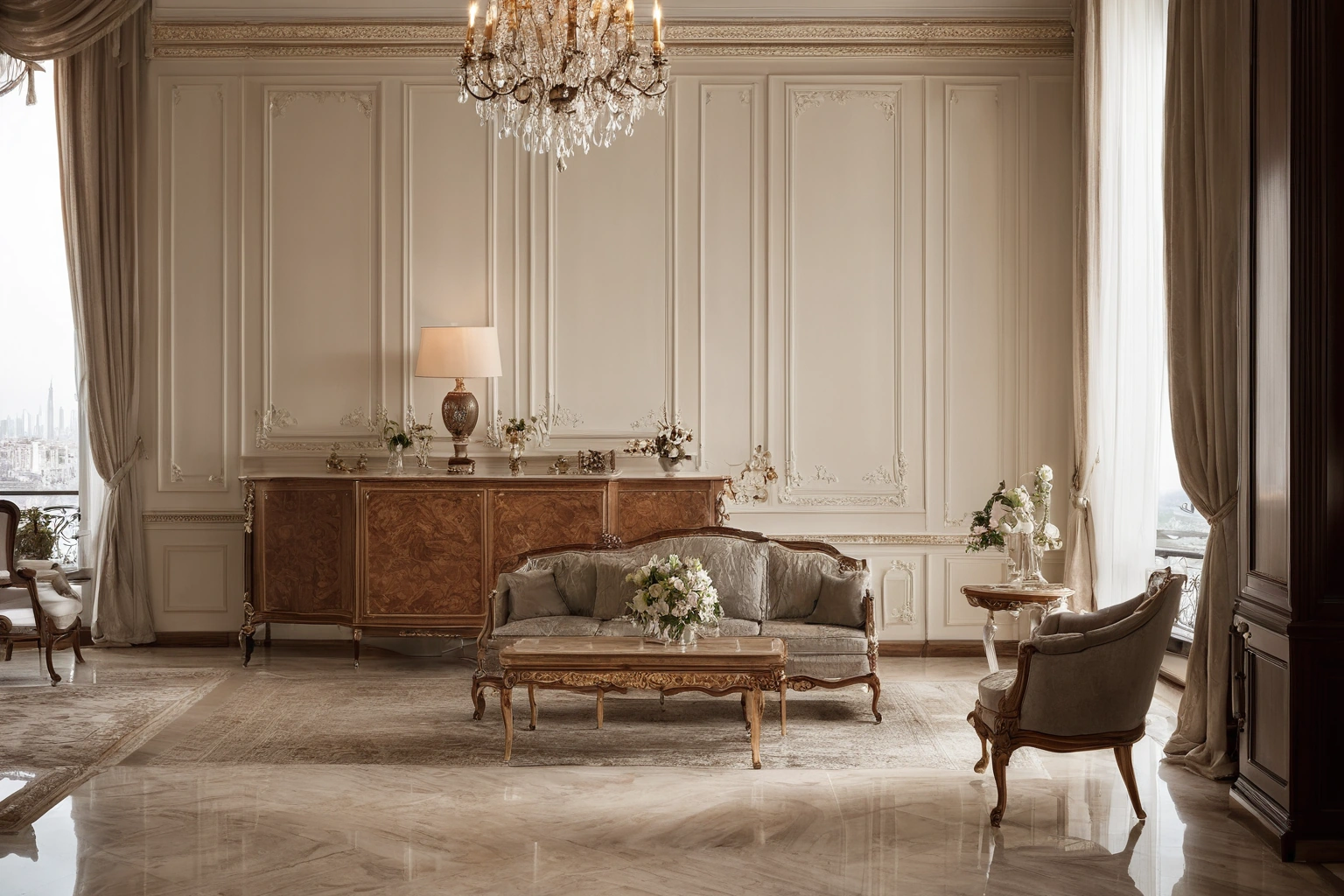
Be precise, because the fair publishes the geography. In its ranking of the top twenty foreign countries by trade attendance, the Salone reports that China dominated once again. Germany placed second, up 5.1%; Spain third, up 8.7%; Brazil fourth, Poland fifth, South Korea fifteenth.
Singapore and Vietnam are not in that top twenty. Their influence is not a headcount, and anyone selling a market-share story about them should be asked for the source. It is the brief they hand the workshop. Their orders arrive with physical conditions attached that a Milanese order does not, and those conditions reach back into the drawing. Vietnam sharpens the point: it is one of the world’s largest furniture manufacturing bases, so a Vietnamese buyer choosing an Italian cabinet is buying what their own industry could build. What they pay for has to be more than assembly.
The humidity problem is not a matter of opinion
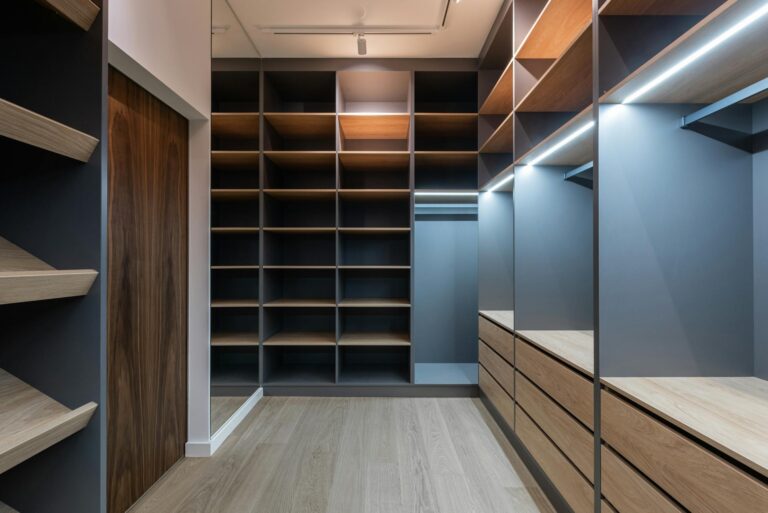
Wood is hygroscopic. It gives off and takes on water vapour until it reaches equilibrium with the surrounding air, an end point called equilibrium moisture content. The numbers are tabulated, not argued: Table 4–2 of the Wood Handbook, from the USDA Forest Products Laboratory, gives the moisture content for any temperature and humidity. A related practical reference is available in Italian Walk-In Closet Design.
Run the destinations through it. Singapore has an annual mean relative humidity of 82.2% at a daily mean of 27.8 °C, per the National Environment Agency. Ho Chi Minh City averages 78% at 28.2 °C.
| Condition | Temperature | Relative humidity | Wood moisture content |
|---|---|---|---|
| Interior held at temperate room conditions | 21 °C | 50% | 9.2% |
| Air-conditioned room, tropics | 27 °C | 60% | 10.8% |
| Ho Chi Minh City, annual mean | 27 °C | 78% | about 15% |
| Singapore, annual mean | 27 °C | 82% | about 16.5% |
| Unconditioned room, humid morning | 27 °C | 90% | 20.2% |
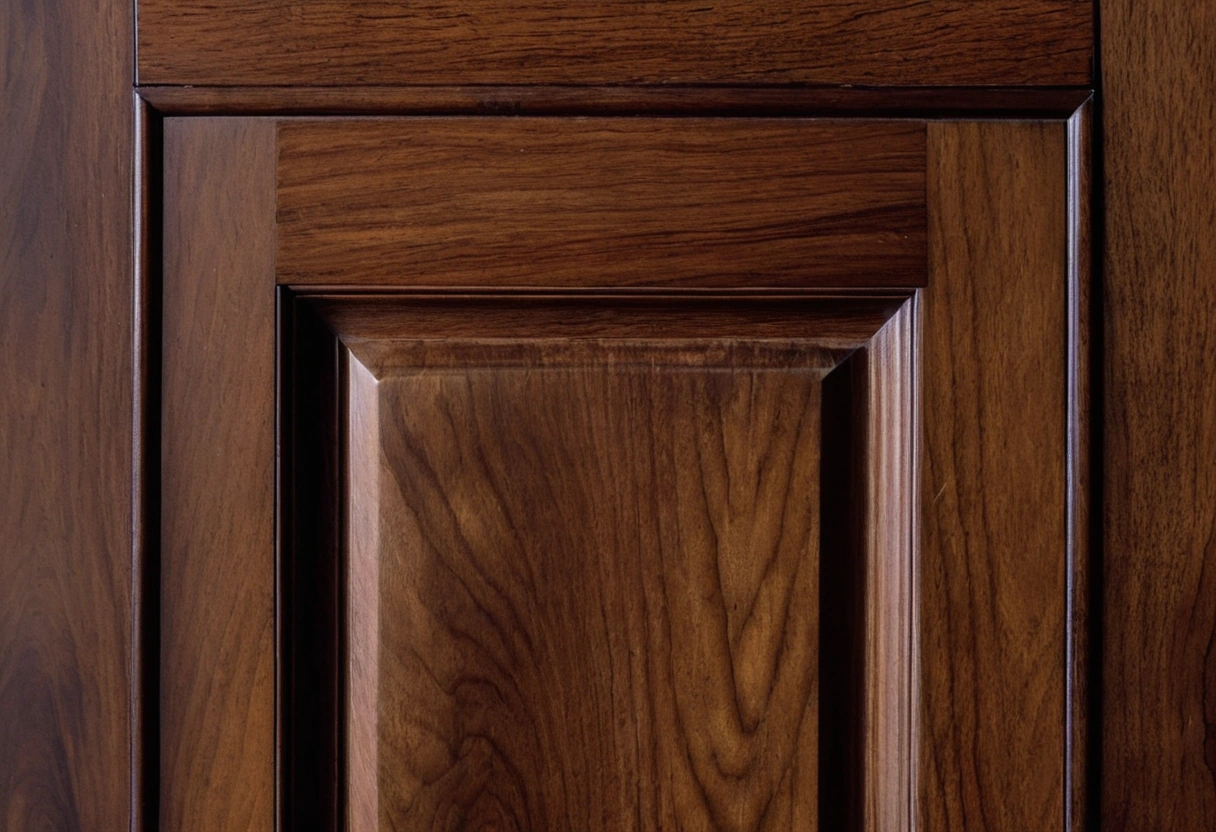
The consequence is dimensional. Below the fibre saturation point, wood shrinks and swells across the grain almost linearly. Black walnut moves 7.8% tangentially and 5.5% radially between green and ovendry. Take a 600 mm plainsawn walnut panel built to sit at 9.2% and put it in a Singapore room near 16.5%: by the handbook’s method it gains about 2% in width, roughly 12 mm. That is a panel splitting its frame, or a drawer that will not open in October.
The air conditioning is the real enemy
A stable, humid room is not the worst case. Wood that reaches 16.5% and stays there has swollen once and settled. The damage comes from cycling, and air conditioning is a cycling machine. Switch it on and the room falls toward 60% humidity, pulling the wood back to about 11%. Leave it off for a fortnight in August and it climbs to 90%, pushing the wood toward 20%. That swing of roughly nine points, repeated, is what opens glue lines and lifts veneer. The wider project context is available from Amaze Expo.
Singapore does some of this without help: its humidity runs from the high 90s in the early morning to around 60% by mid-afternoon. Thin sections follow that cycle faster than a thick carcass, so the finish and veneer take the punishment first.
A room held at a steady 85% is a kinder home for a walnut panel than a room that is 60% by day and 90% by night.
What the workshop changes in response
None of this is new physics. What changed is that the old answers stopped being optional. Frame-and-panel construction exists because a panel that floats free in a groove can swell 12 mm without touching anything. Quartersawn stock moves radially rather than tangentially: on that same panel, roughly 8 mm instead of 12 mm, and it cups far less. A workshop building classic Italian furniture for export should name the destination climate on the order and condition the timber to it before a joint is cut, rather than drying everything to one European target. Further related coverage is collected in Blog.
- Equilibrium moisture content (EMC)
- The moisture content wood settles at for a given temperature and humidity.
- Fibre saturation point
- About 30% moisture content. Below it, wood shrinks and swells; above it, it does not.
- Plainsawn and quartersawn
- How the board was cut from the log. Quartersawn moves less across its width and resists cupping.
- Knock-down construction
- A piece engineered to split into sections and be rebuilt on site without losing structural joints.
The lift is a design constraint
The second rewrite is geometric. Close to 80% of Singapore’s resident population lives in public housing, and even above that market the buyer is usually in a tower, not a villa. A dining suite drawn for a piano nobile has to reach the 28th floor through a service lift, a corridor with two right angles and a standard door. The furniture that arrives intact was drawn to come apart.
- Lift car depth and door width, which decide the longest element that can go up.
- Corridor turning circles, which kill more sideboards than lifts do.
- Ceiling height, which sets the chandelier and the top of any wall unit.
- Whether a structural joint can be undone and remade on site.
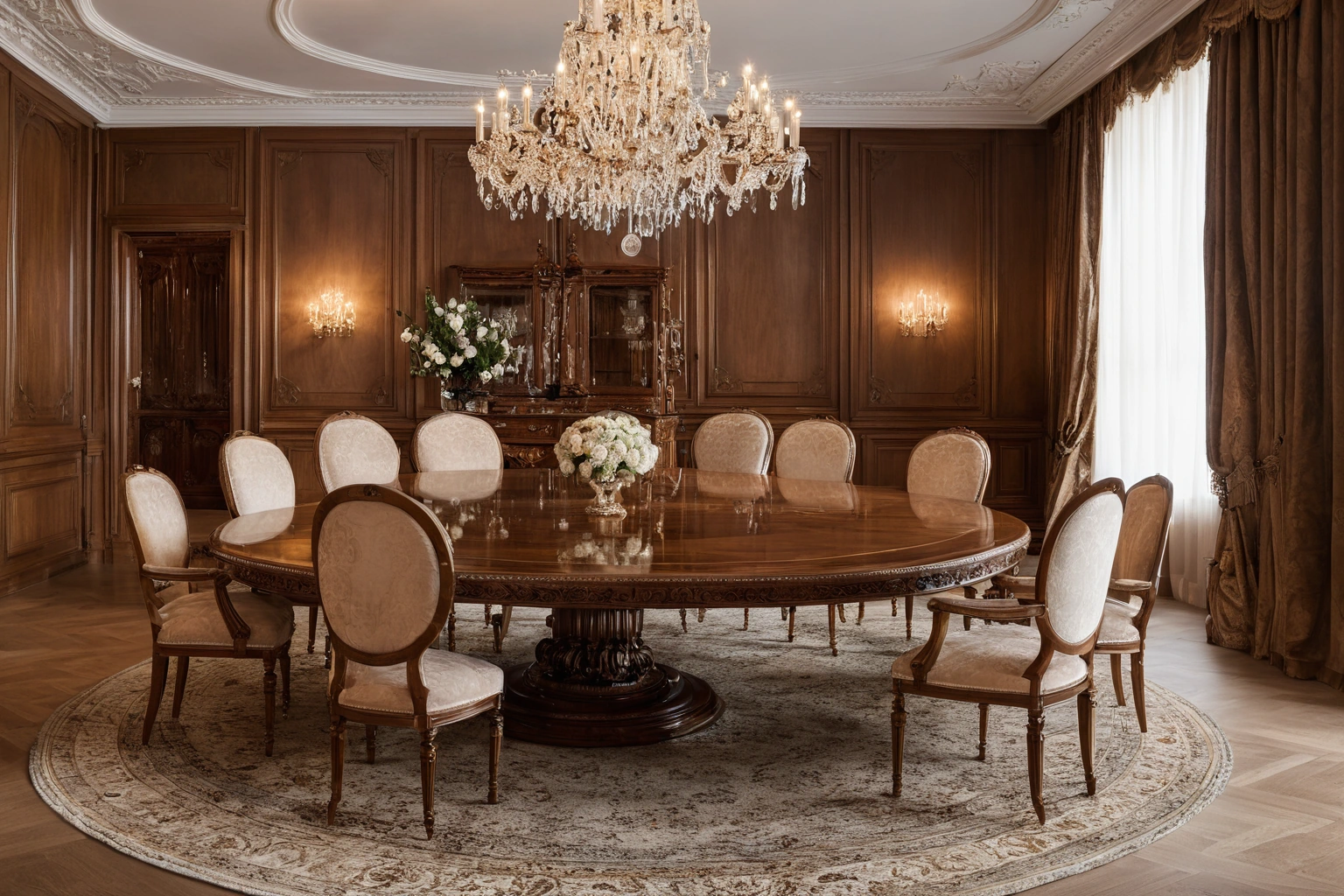
Scale follows. A 3.6 m wall unit becomes three modules with matched grain across the joins. Dining changes shape too: where the meal is shared from communal dishes, a round table with a rotating centre does work a long rectangular table cannot, and it must be built round, not adapted.
Who is actually buying
The third change is the channel. The buyer often never walks into a showroom: a designer or a developer specifies the furniture as part of a fit-out. With support from the Italian Trade Agency, the 2026 edition hosted over 200 contract-sector professionals from 51 countries, and Salone put the curatorial masterplan for Salone Contract 2027 in the hands of Rem Koolhaas and David Gianotten of OMA, aimed at a global contract market the organisers put at 68 billion euros. The specifier, not the household, asks the questions. For the next stage of the brief, see About Us.

Time and distance
A commissioned piece is made over months and shipped over weeks by sea, so the specification is locked long before anyone sees the room. The container is its own humidity event: steel, ocean air and a temperature gradient from the Mediterranean to the equator. Timber that left the workshop at 9% has ridden a cycle before it is unwrapped. The questions worth asking are dull and specific.
- State the destination. The order should name the city and whether the room is air conditioned continuously or intermittently.
- Ask the target moisture content. A workshop conditioning to the destination gives a number and a method.
- Ask which panels float. A wide solid panel glued rigid on four edges is a crack with a delivery date.
- Ask how it comes apart. Confirm the piece divides into elements that fit the lift.
- Ask about the crossing. Sealed packing and desiccant cost little next to a cabinet that swells in transit.
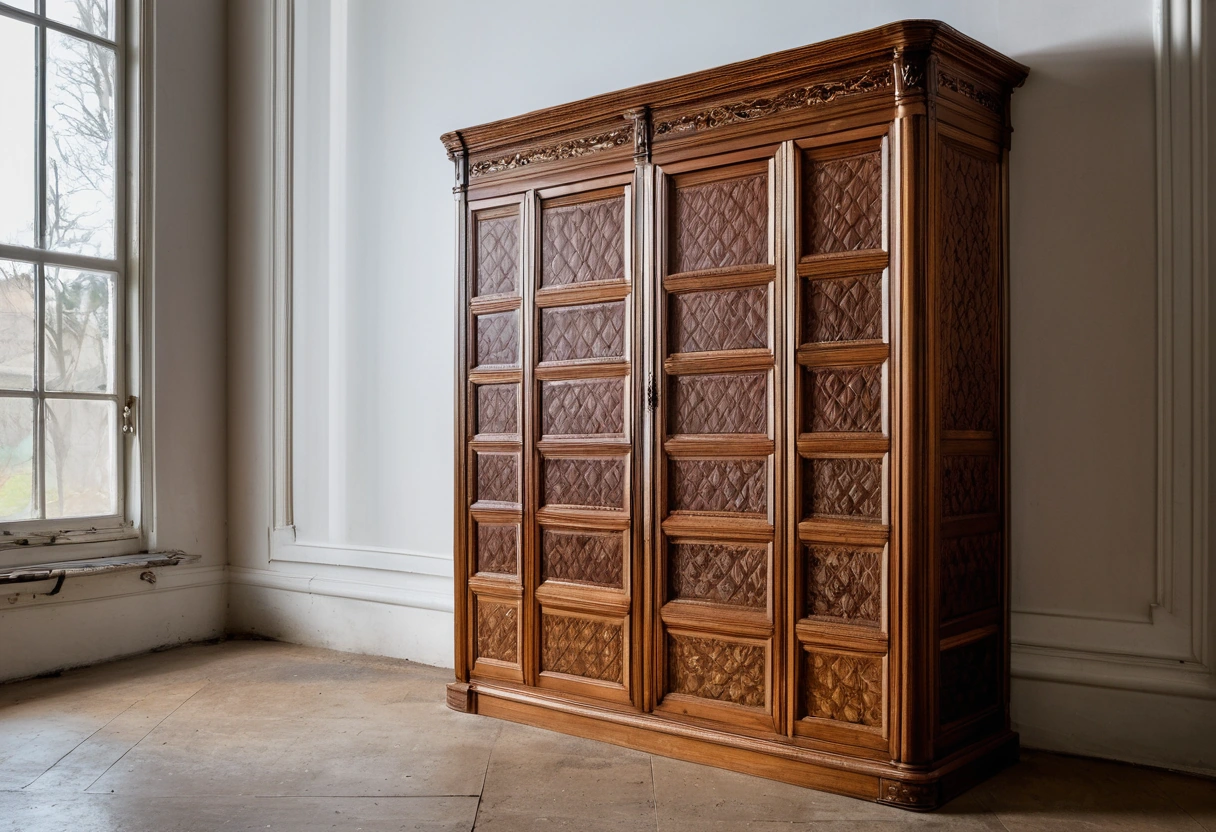
Milan still draws the world for six days in April. What has moved is the far end: when two thirds of the trade audience is foreign and much of it lives near the equator in a tower block, the tropics stop being an export problem and become a design input. The furniture that lasts there was never the furniture shipped unchanged. It was drawn, cut and dried for the room it was going to.